Modeling and Simulation Services
Accelerate Development with Physics-Based Modelling and Simulation
Reduce technical risk and accelerate development with D-Pace’s advanced modelling and simulation capabilities. Leveraging a powerful suite of software tools and decades of ion source expertise, we help customers evaluate concepts, optimize designs, and gain critical performance insights before committing to fabrication or testing. By combining simulation with practical engineering experience, we can identify potential issues early, shorten development cycles, and support more informed design decisions.
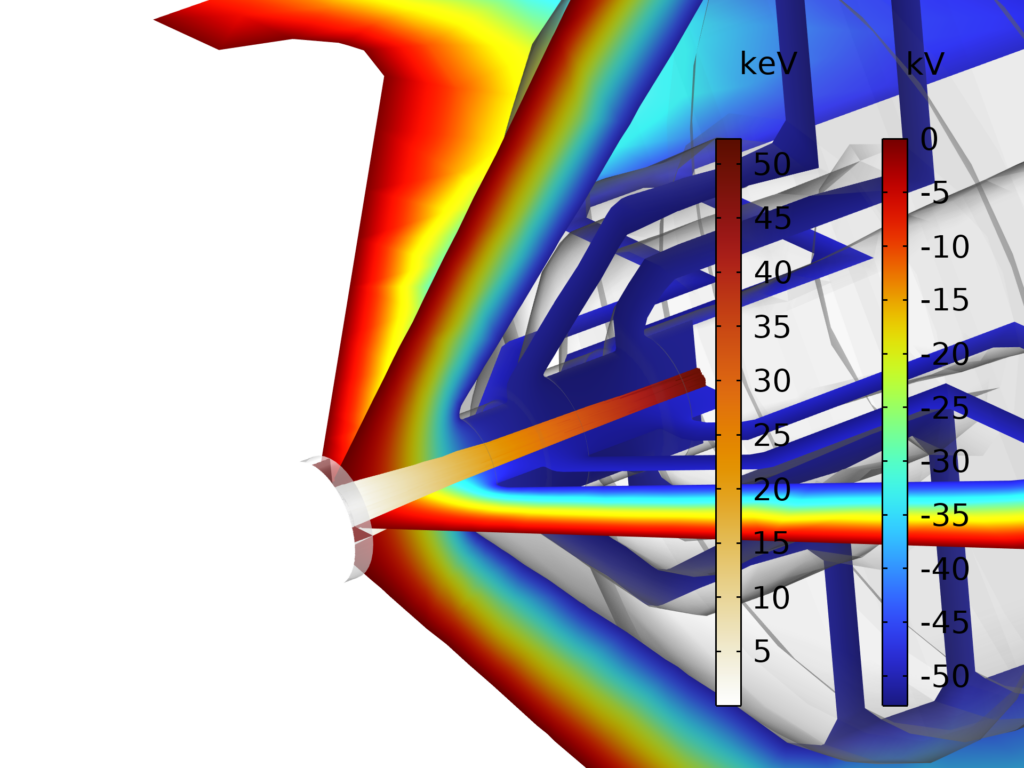
Ion Sources Simulation
Ion sources are among the most complex accelerator components to design and optimize. D-Pace combines advanced simulation tools with experimental validation at our Ion Source Research Center to accelerate development, reduce risk, and improve performance.
Before investing in hardware or extensive testing, simulation can help evaluate design concepts, identify potential issues, and provide deeper insight into underlying beam and plasma behaviour. Our modelling capabilities include:
- Electric field analysis to identify and mitigate high-stress regions and triple points
- Beam extraction and transport optimization to improve current and emittance
- Particle-in-cell (PIC) simulations of plasma dynamics
- Magnetic field modelling for particle confinement and transport studies
- RF-plasma interaction analysis
- Cooling water and gas flow modelling
Our models can be tailored to your specific application and combined with optimization techniques to evaluate design alternatives, quantify performance trade-offs, and support informed engineering decisions.
Beamline Simulation
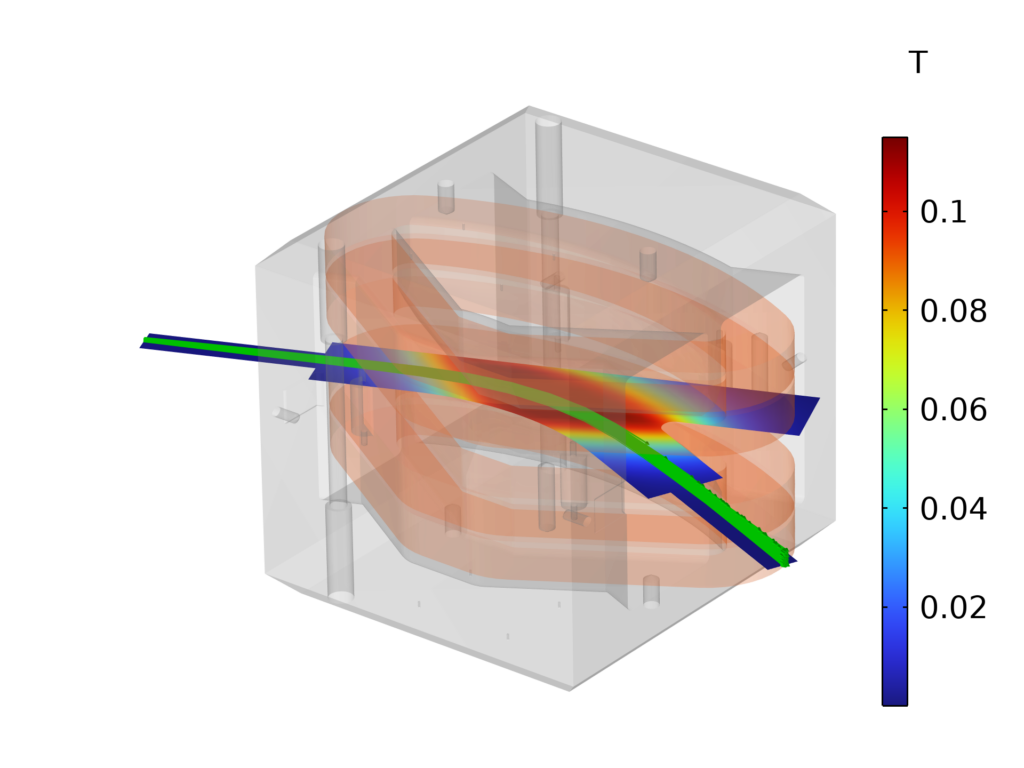
D-Pace designs and optimizes beamlines for particle accelerator facilities worldwide. Using advanced simulation tools, we help customers develop efficient beam transport systems that deliver beams from ion sources to downstream equipment such as cyclotrons, LINACs, research beamlines, and production systems.
Our modelling capabilities support the design and optimization of complete beamline systems, including magnets, electrostatic devices, beam diagnostics, vacuum components, and supporting infrastructure. Early-stage concepts are typically evaluated using first-order beam optics simulations, enabling rapid iteration and design refinement before moving to detailed engineering.
Our simulation expertise includes:
- Magnetic system modelling, including dipoles, quadrupoles, and solenoids
- Beam diagnostics, including Faraday cups and emittance measurement systems
- Electrostatic devices such as beam choppers, deflectors, and einzel lenses
- RF components, including bunchers and accelerating structures
- Beam transport and optics optimization
- Mechanical integration and layout studies
For highly specialized magnetic systems, including high-resolution spectrometer magnets, D-Pace works closely with Buckley Systems, a global leader in accelerator magnet design and manufacturing.
“By combining simulation, engineering expertise, and practical accelerator experience, D-Pace helps customers reduce design risk, optimize beam performance, and accelerate the path from concept to commissioning.“
Thermal Analysis
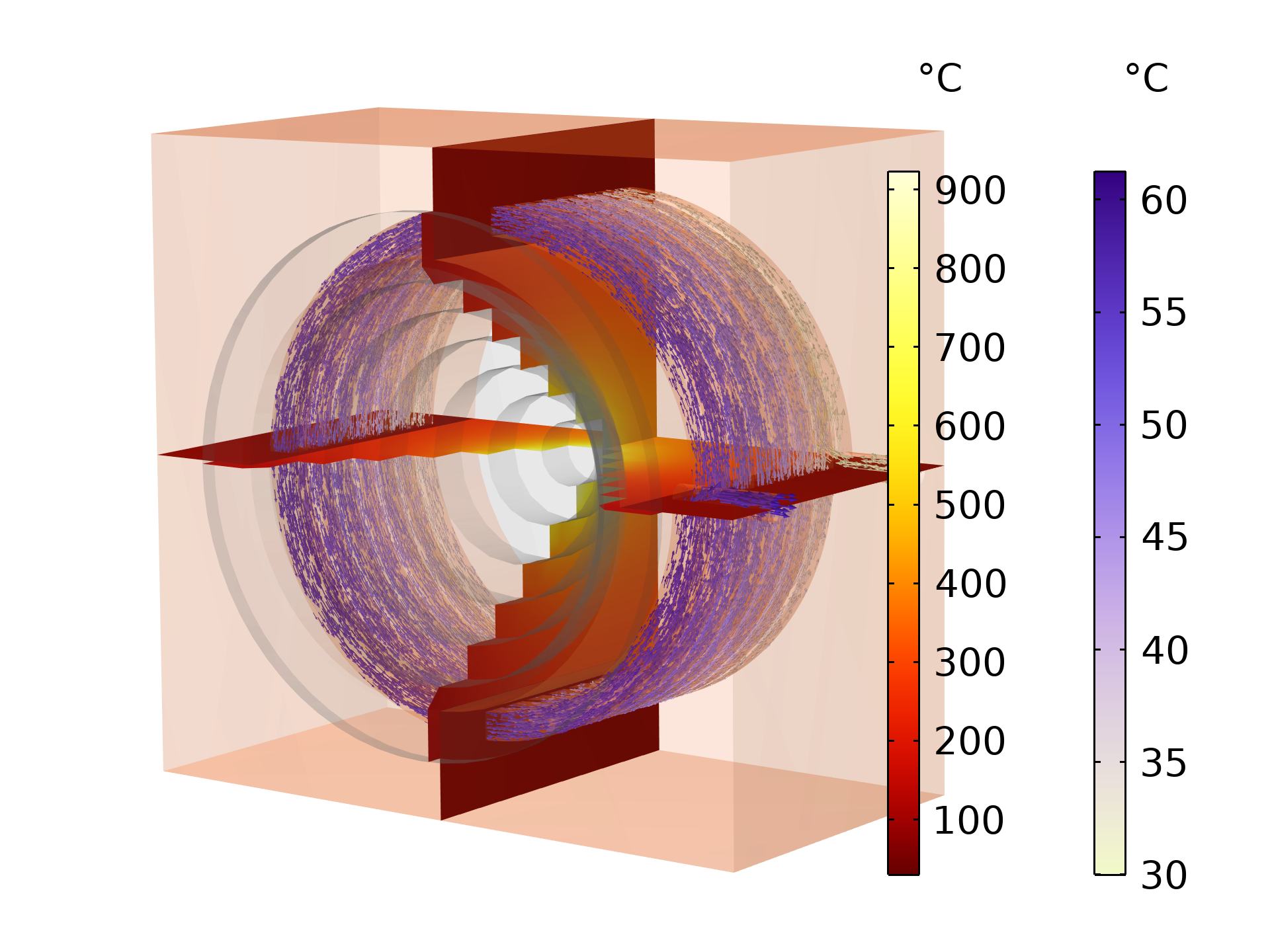
Effective thermal management is essential for reliable accelerator and ion source operation. D-Pace uses thermal modelling and engineering analysis to evaluate heat loads, optimize cooling performance, and reduce development risk.
Our experience includes ion sources, beam diagnostics, beam stops, targets, RF components, and other high-power accelerator systems. We design and analyze custom cooling solutions, including water-cooled assemblies subjected to demanding thermal loads and power densities.
Our capabilities include:
- Thermal and heat transfer analysis
- Cooling system design and optimization
- Water flow and heat load modelling
- Thermal stress evaluation
By identifying thermal challenges early in the design process, D-Pace helps customers improve reliability, extend component life, and achieve optimal system performance.
Simulation Software
D-Pace leverages industry-leading simulation software and decades of accelerator expertise to model, analyse, and optimise complex ion source, beam diagnostic, and beamline systems, including:
COMSOL Multiphysics®
COMSOL Multiphysics® is a cornerstone of D-Pace’s modelling and simulation capabilities. We use it to analyse and optimize ion sources, beamlines, and accelerator components across a wide range of coupled physics, including electrostatics, magnetics, RF systems, heat transfer, particle tracking, and fluid flow. By integrating multiple physical phenomena within a single model, COMSOL enables rapid design iteration, performance optimization, and deeper insight into complex systems.
IBSimu®: Optimizing Ion Source Extraction Systems
IBSimu® is one of D-Pace’s preferred tools for ion source extraction and low-energy beam transport modelling. Developed specifically for ion optics and plasma extraction applications, it enables accurate simulation of electric fields, particle trajectories, and space-charge-dominated beam transport.
Our physicists use IBSimu extensively to design and optimize ion source extraction systems, helping customers improve beam quality, maximize transmission, and reduce development risk before hardware is built. These capabilities are complemented by D-Pace’s close collaboration with IBSimu developer Taneli Kalvas of the University of Jyväskylä.
By integrating IBSimu with our broader simulation workflow, including COMSOL Multiphysics®, we can combine detailed ion optics analysis with multi-physics modelling to gain deeper insight into complex ion source and beamline designs.
Beam Optics Simulator
D-Pace has developed proprietary beam optics simulation tools to rapidly model and optimize beam transport systems. These first-order beamline models enable fast evaluation of beam behaviour through common accelerator components such as dipoles, solenoids, electrostatic elements, and accelerating structures.
By quickly predicting beam envelopes and transport characteristics, our simulation tools support efficient beamline design, rapid iteration, and early-stage optimization before detailed engineering begins.
These capabilities help customers refine layouts, evaluate design alternatives, and reduce development risk while accelerating the path from concept to implementation.
MolFlow
MolFlow® is D-Pace’s primary tool for high-vacuum system modelling and analysis. Developed at CERN and widely adopted across the accelerator industry, it uses Monte Carlo methods to predict vacuum performance, gas flow, and pumping effectiveness in the molecular flow regime.
By simulating vacuum behaviour before hardware is built, MolFlow helps optimize pumping configurations, identify potential performance limitations, and reduce design risk for ion source, beamline, and accelerator systems.
SolidWorks® Simulation
SolidWorks® Simulation enables D-Pace to rapidly evaluate and optimize mechanical and thermal designs using integrated Finite Element Analysis (FEA) and Computational Fluid Dynamics (CFD). We use these tools to analyse heat transfer, cooling performance, structural integrity, thermal stresses, and vibration response, allowing our engineers to identify potential issues early, accelerate design iterations, and develop reliable, high-performance accelerator and ion source components.
LePIC – Particle-in-Cell
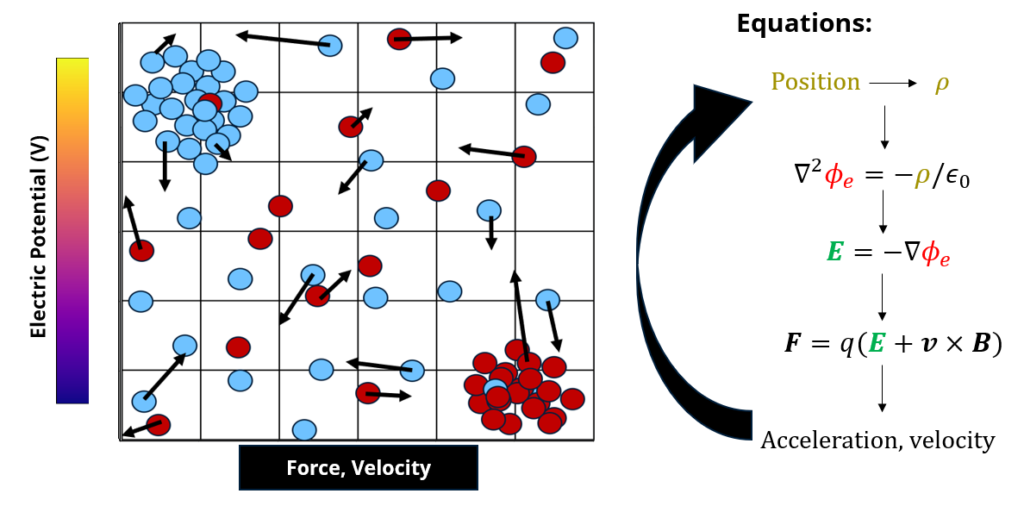
LePIC+ Particle-in-Cell (PIC) Simulation enables D-Pace to study complex plasma behaviour within ion sources and extraction systems. Developed in collaboration with CRNS, this advanced 3D plasma simulation tool helps our engineers and physicists gain deeper insight into RF discharges, ion extraction, plasma-wall interactions, and other critical plasma phenomena. While primarily used as a research and design tool, LePIC+ provides valuable guidance for optimizing next-generation ion source technologies and advancing innovative accelerator solutions.

Simulation Optimizations
D-Pace combines advanced simulation tools with optimization techniques to identify high-performance, cost-effective design solutions. Our physicists tailor optimization strategies to each project’s objectives, whether maximizing performance, minimizing cost, or balancing multiple design requirements. From classical optimization methods to advanced Bayesian approaches, we help customers navigate complex design spaces, accelerate development, and make data-driven engineering decisions with confidence.

Advancing Numerical Plasma Modeling for Next-Generation Ion Sources
Jasmin is a Ph.D. student in Physics at the University of Victoria, specializing in numerical plasma physics and kinetic/fluid modeling for ion sources. His project focuses on modernizing and modularizing…
Read articleCoulomb collisions and 𝝐𝟎 scaling in the PIC code LePIC for Ion Source Applications
Implicit particle-in-cell development for ion source plasmas
[ GALLERY ]


[ RELATED PRODUCTS ]

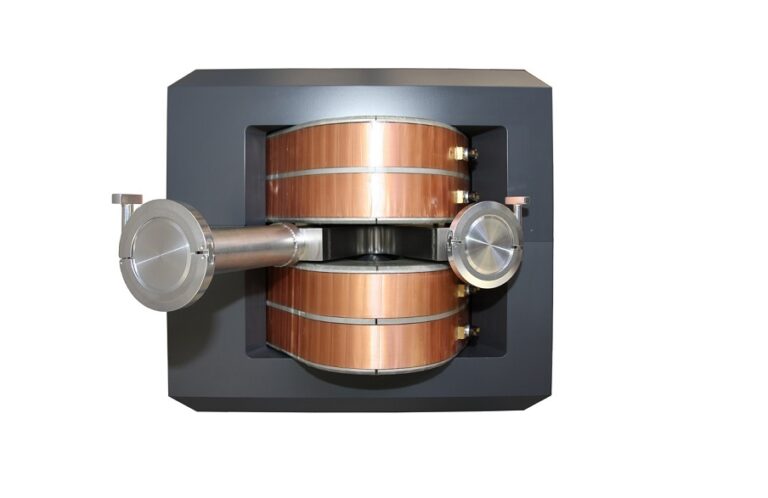
Dipoles
SPEC-100.45
1:100 Resolution Spectrometer, 45° Bender
View product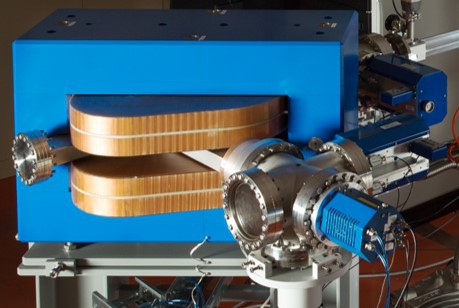
Dipoles
SPEC-500
1:500 Resolution Spectrometer
Resolves ion beams to better than 1 part in 500.
View product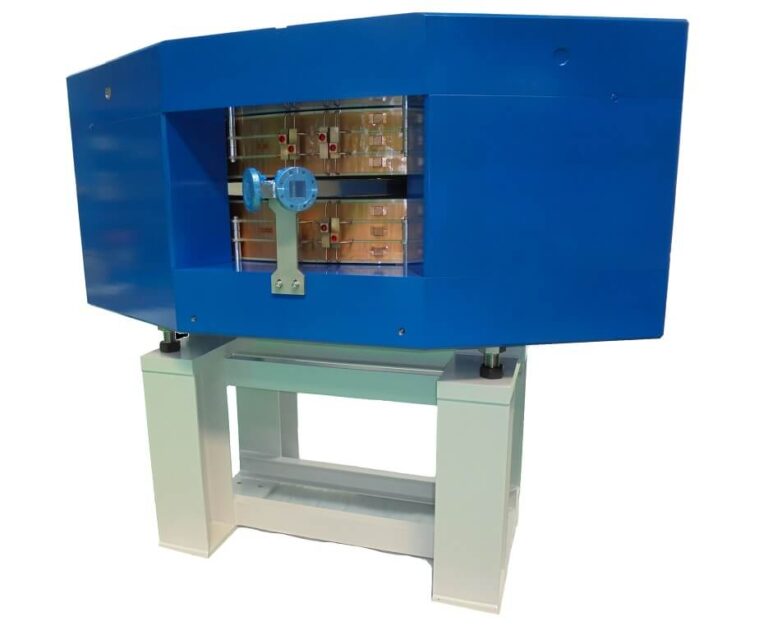
Dipoles
SPEC-1500
1:1500 Resolution Spectrometer
View product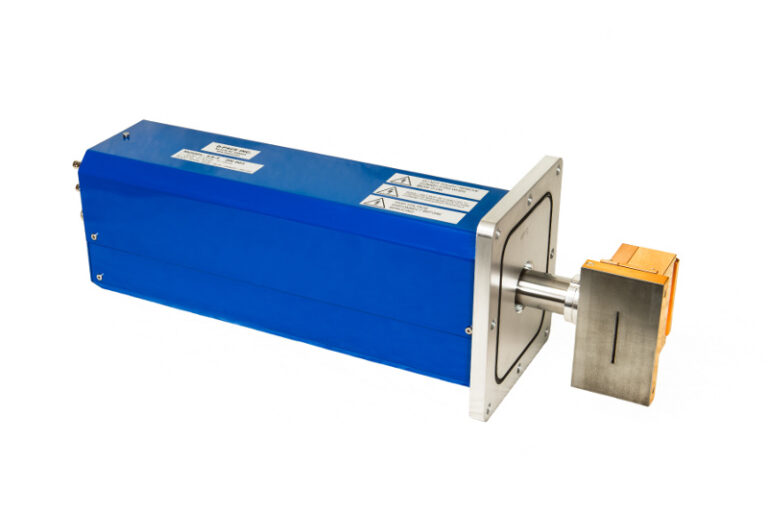
Emittance Scanners
ES-4
Emittance Scanner, 1.5 kW
Complete Emittance & Phase Space Scanner System for beams up to 1.5 kW. Our most popular beam diagnostic.
View product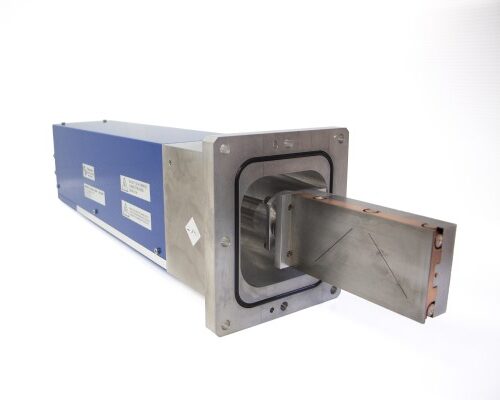
Beam Profilers
SS-35.1500
XY Scanning Slit Beam Profiler, 1.5 kW
Dual axis beam profiler using orthogonal slits that move through the beam using a single actuator. Dual integral Faraday cups.
View product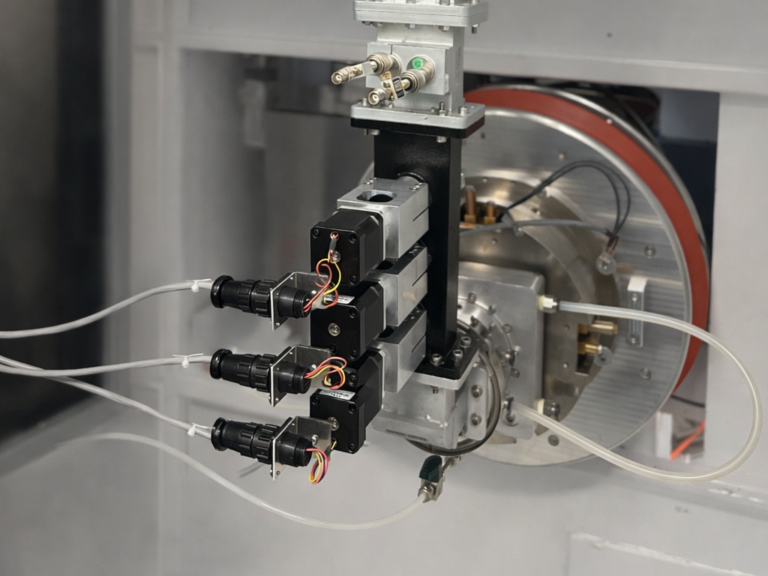
ECR Ion Sources
IS.ECR-010
2.45 GHz ECR Ion Source
High Current Positive Ion Source • ECR Technology • Neutron Therapeutics Licensed
View product[ DEDICATED CONTACT ]

Dr. Nicolas Savard
Ph.D
Physicist